

Why Quality Graphic Tees Cost More (Real Breakdown)
Table of Contents
- Why Quality Graphic Tees Cost More: The Short Answer
- How to Tell if a T-Shirt Is High Quality Before You Buy
- Screen Printing vs Digital Printing Cost and Durability
- Frequently Asked Questions
Last Updated: September 7, 2026
Why Quality Graphic Tees Cost More: The Short Answer
Quality graphic tees cost more because the price reflects premium materials, licensed artwork, ethical manufacturing, and printing built to survive repeated washing. A $10 shirt and a $30 shirt can look identical on a hanger, but the difference shows in fabric weight, print durability, and whether the design holds up after a dozen washes.
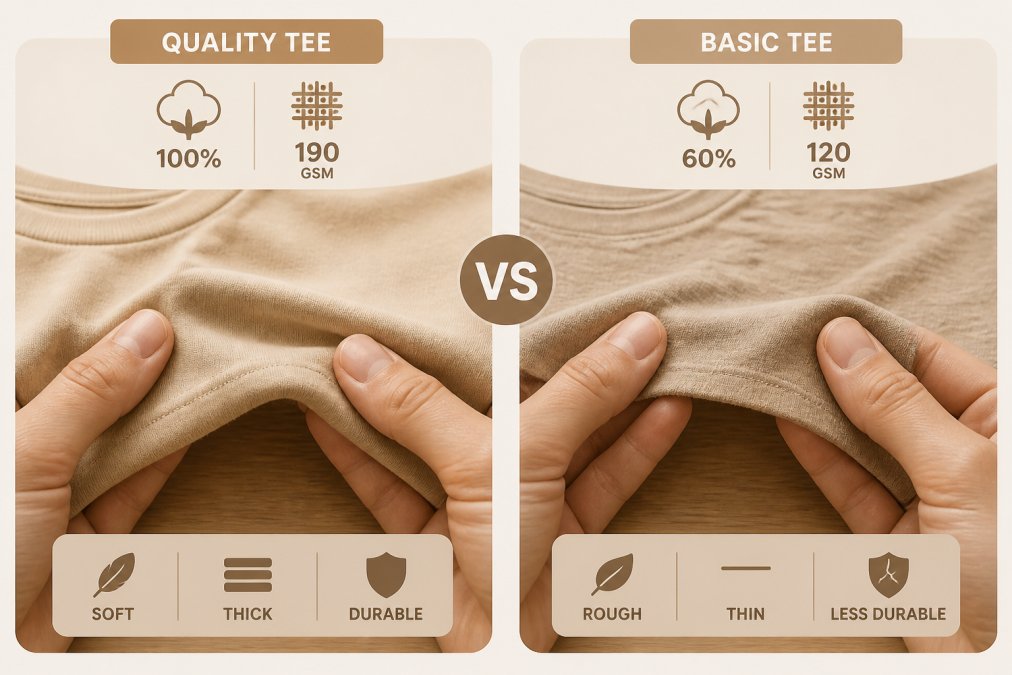
How to Tell if a T-Shirt Is High Quality Before You Buy
Flip it inside out: side-seamed construction prevents twisting. GSM measures fabric weight: budget tees fall in the 120-150 GSM range; premium blanks sit in the 150-180 GSM range. Ring-spun and combed cotton also signal quality.
Screen Printing vs Digital Printing Cost and Durability
Screen printing pushes ink through a mesh stencil, one color at a time; it's expensive for single shirts but economical for bulk runs. Digital printing (DTG) applies ink directly to the garment, making it cheaper for one-off orders and highly detailed designs, though DTG prints generally don't match screen printing's lifespan, especially on dark fabrics.
| Printing Method | Best For | Durability | Cost Per Shirt |
|---|---|---|---|
| Screen printing | Bulk orders, simple designs | Excellent, 50+ washes | Lower at volume, higher setup |
| DTG digital | Single shirts, full-color art | Good, prone to cracking | Higher per unit, no setup |
What about the artwork itself?
Licensed graphics require artist royalties or licensing fees baked into the retail price.
The cost-per-wear calculation
A $16 shirt that shrinks and fades after five washes costs over $3 per wear, while a $25 shirt that holds its shape and print for fifty washes costs fifty cents per wear. That math explains why textile quality research from the University of California consistently shows that higher GSM fabrics and tighter knit construction directly correlate with garment longevity.
Environmental impact vs. cost
Cheaper tees create a hidden environmental bill. the EPA's report on textile waste documents that textiles account for a significant share of municipal solid waste, much of it from low-quality garments discarded after minimal use. Paying more upfront for a durable shirt reduces overall consumption.
Counterfeit and knock-off economics
Knock-off graphic tees undercut legitimate pricing by skipping licensing fees, quality blanks, and ethical labor standards. the U.S. Patent and Trademark Office's page on counterfeit goods explains that counterfeiting violates intellectual property law and often funds operations with poor working conditions.
Why premium blanks cost more
Premium blanks use ring-spun combed cotton with higher GSM, reinforced shoulder seams, and pre-shrunk fabric.
Brand positioning and retail markup
Established brands charge more because they've built trust around consistent sizing, print longevity, and customer service. When you buy from a smaller brand like StumbleRump, you're paying for a curated design catalog.
For a shirt that balances humor with quality construction, check out the Duct Tape Won't Fix Everything But It Will Muffle Screams Tee or the Life Is Beachy Unisex T-Shirt for summer-ready style that holds up wash after wash.


Frequently Asked Questions
What is a reasonable price for a graphic tee?
A reasonable price for a quality graphic tee is between $15 and $30. This range covers a premium blank made of ring-spun cotton, a durable print, and original artwork. Shirts priced lower often cut corners on fabric weight or use cheap printing that cracks after a few washes. At StumbleRump, $15.99 to $18.99 gets you a solid cotton tee with a print built to last.
How does fabric weight affect the price of a t-shirt?
Fabric weight, measured in GSM, directly affects cost. A heavier shirt (180 GSM or more) costs more because it uses more cotton and feels more durable. Cheaper tees often use lighter, thinner fabric that shrinks or loses shape. Quality graphic tees use ring-spun combed cotton that feels soft but holds up, which is why they cost more upfront but last longer.
Are graphic tees from fast fashion retailers good quality?
Fast fashion graphic tees are usually hit or miss, mostly miss. They often use thin fabric and plastisol prints applied quickly, which crack and fade after a few washes. The low price reflects lower material costs and faster production. A quality graphic tee uses better cotton and printing methods, giving you a shirt that looks good after dozens of washes.
Quality graphic tees cost more because durability, original art, and ethical production aren't cheap. The cheap shirt saves you $10 today and costs you in shrinkage, cracked prints, and a wardrobe that falls apart by fall. StumbleRump builds its collection on premium ring-spun cotton, original humor-driven designs, and prints engineered for repeated washing. Get started with StumbleRump and find a shirt that survives the party and the laundry cycle.