

Signs of High Quality Buttons and Hardware
Table of Contents
- What Makes High Quality Buttons Stand Out
- Clothing Button Materials That Last
- How to Check Button Quality on Your Clothes
- Frequently Asked Questions
Last Updated: October 16, 2026
What Makes High Quality Buttons Stand Out
High quality buttons separate a shirt that lasts years from one that falls apart after a few washes.
Material matters most: bone and horn resist wear better than cheap plastic, metal (brass, copper, or stainless steel) lasts longest, and corozo offers durability without the cost of genuine horn or bone.
Weight tells a story too: heavy buttons tend to be higher quality; light, hollow ones fail quickly.
Clothing Button Materials That Last
Natural materials like bone and horn age well and resist cracking better than plastic. Metal buttons (brass, copper, or stainless steel) are the most durable option. Corozo buttons come from a plant seed: stronger than plastic, stain-resistant, and more sustainable. Plastic and polyester buttons are cheap but fragile, cracking easily and yellowing over time. A quality everyday shirt deserves bone, horn, or metal.
How to Check Button Quality on Your Clothes
Inspecting buttons takes 30 seconds and reveals everything about garment quality.
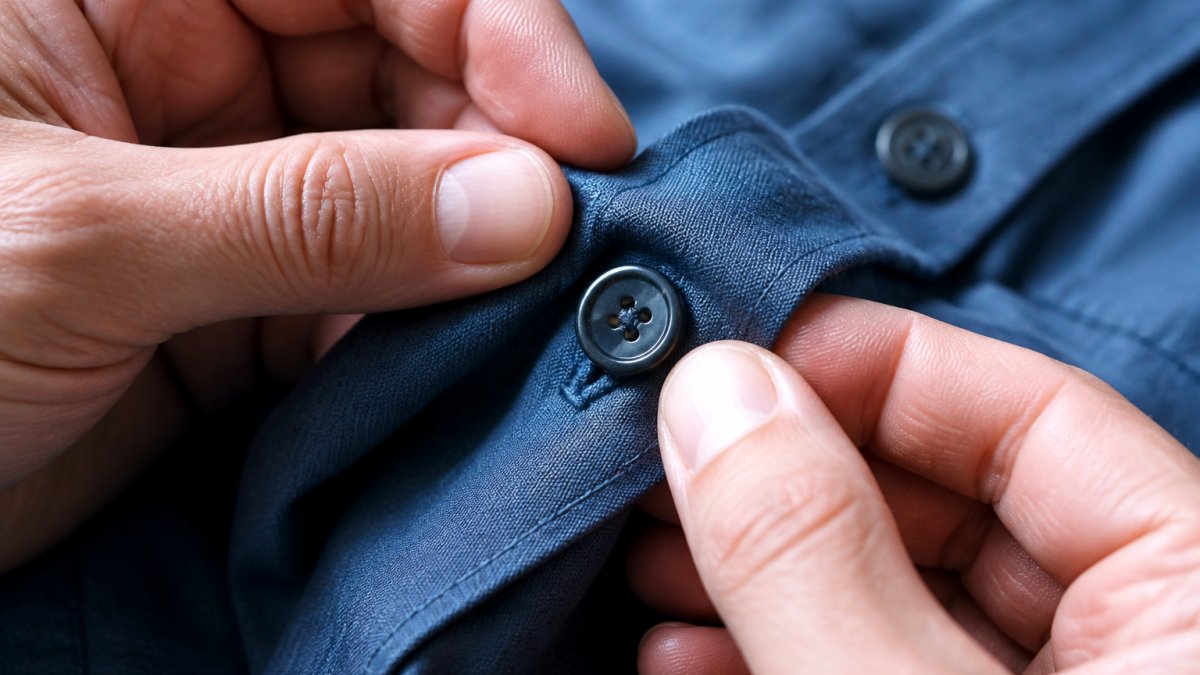
Start with the attachment. Flip the garment inside out: quality buttons have tight, even stitching in a square or X pattern; loose stitching means the button will fall off soon. Check the surface for cracks, chips, or discoloration, feel the weight (heavier is almost always higher quality), look at the finish for even shine or consistent matte color, and examine the shank for a sturdy, well-formed stem.
| Quality Indicator | What to Look For | What It Means |
|---|---|---|
| Stitching | Tight, even, square or X pattern | Button will stay attached |
| Surface | Smooth, uniform, no cracks | Material is durable |
| Weight | Feels substantial and solid | Higher quality material |
| Finish | Even color, consistent shine or matte | Proper manufacturing |
| Shank | Sturdy, well-formed stem | Will handle repeated wear |
Hardware beyond buttons matters too: rivets, snaps, and zippers follow the same rules, where tight attachment, solid material, and even finish signal quality.
Button and hardware quality is one of the fastest ways to judge overall construction. Take 30 seconds to feel the weight, check the stitching, and look at the finish before you buy.
We build our funny party t-shirts with quality hardware in mind, so they hold up through beach days, holiday celebrations, and every social gathering in between.
Frequently Asked Questions
How can you tell if clothing buttons are high quality?
Inspect the button material, finish, and attachment. High quality buttons feel substantial in weight, have smooth polished or matte finishes without chips or cracks, and are securely sewn with multiple threads. Check that the button sits flat against the fabric and doesn't wobble. Natural materials like horn, bone, and corozo tend to be more durable than cheap plastic alternatives. Look for consistent color and no visible defects on the surface.
What materials are best for durable clothing buttons?
Metal buttons, particularly brass and copper, offer excellent durability and develop a natural patina over time. Horn, bone, and corozo nuts are premium natural materials that resist wear and fragility. High-quality polyester rivals some natural materials in longevity. Avoid thin plastic buttons that crack easily. The material should feel weighty and substantial, heavier buttons generally indicate better construction and longer lifespan.
How can you tell whether a button is securely attached?
Gently tug on the button to test for movement. A securely sewn button won't shift or wobble. Examine the thread on the back side, quality fastening uses multiple passes of thread, creating a reinforced shank. The stitching should be tight and even with no loose threads. Check that the button hole isn't stretched or torn around the edges. Buttons on quality garments are attached to stay, not to fail after a few washes.