

How to Spot High Quality Cotton: 5 Simple Checks
Table of Contents
- Why Cotton Quality Matters for Your Favorite Tee
- How to Check Fabric Quality by Touch and Sight
- Cotton Fabric Burn Test Instructions for Home
- Pima vs Egyptian Cotton Differences and Other Premium Types
- Frequently Asked Questions
Why Cotton Quality Matters for Your Favorite Tee
Spotting high quality cotton comes down to a few simple physical checks. High quality cotton feels dense yet soft, resists wrinkling, and holds its shape through repeated washes. The difference between a $10 tee and a $19.99 tee often hides in fiber length and weave density, not the brand name.
Most shoppers buy on print design alone and discover fabric flaws after the first wash. This guide shows you how to run the touch, sight, and burn tests so you never waste money on a shirt that pills, shrinks, or feels like sandpaper.
How to Check Fabric Quality by Touch and Sight
The fastest way to evaluate fabric quality is the hand-feel test combined with a close visual inspection of the weave. Rub the fabric between your thumb and forefinger; premium cotton feels smooth with a soft drape, while low-grade cotton often feels grainy, thin, or stiff.
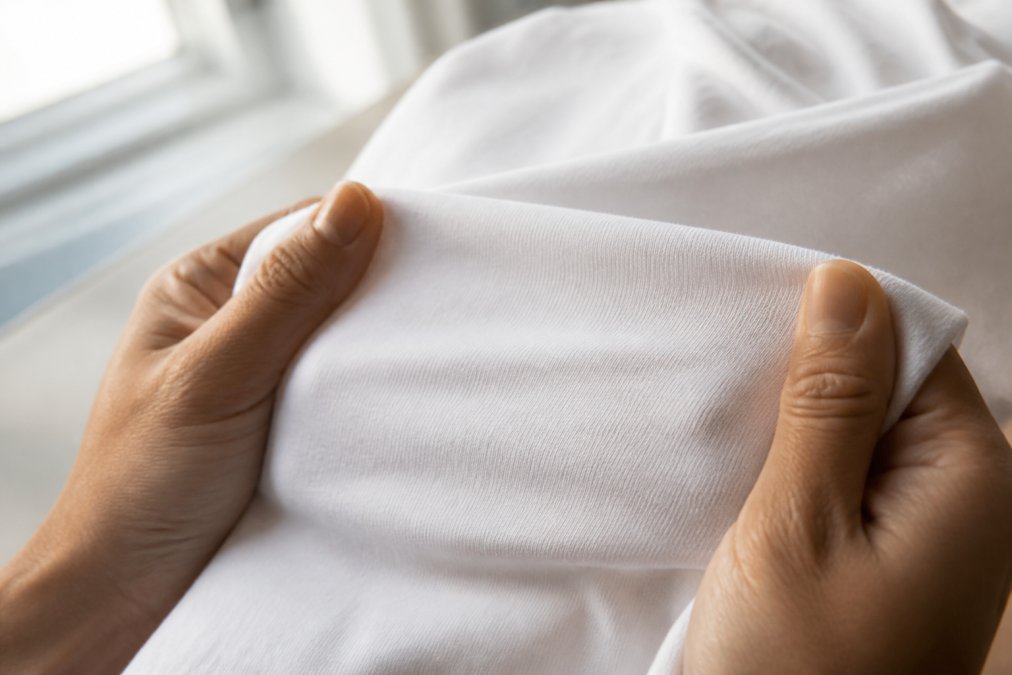
Look at the surface under bright light. High quality cotton has a consistent, tight weave with no visible gaps or slubs. If you can see pinholes of light, the weave density is too low and the shirt will wear out quickly. Heavier cotton, measured in GSM, drapes better and resists wrinkles; a quality tee should feel substantial without being stiff.
Cotton Fabric Burn Test Instructions for Home
The burn test is the most reliable objective method for confirming fiber purity, and you can do it safely at home with a lighter and a metal tray. Pull a small thread from an inside seam and hold it with tweezers over a fireproof surface.
Here is what to look for:
- Natural cotton burns with a steady flame, smells like burning paper or leaves, and leaves a soft gray ash that crumbles easily.
- Synthetic blends (polyester, nylon) melt and curl away from the flame, smell like burning plastic, and leave a hard, dark bead.
- Cotton blends will burn but also show melting or beading, indicating mixed fibers.
This test matters because many "premium" shirts on the market are actually cotton-poly blends that pill and trap heat. Pure cotton is more breathable and moisture-wicking, which is why it dominates summer wear. Always test an inconspicuous spot so you do not ruin the shirt. The FTC textile labeling guidelines require fiber content disclosure on apparel, but the burn test verifies whether the label is telling the truth.
Pima vs Egyptian Cotton Differences and Other Premium Types
Extra-long staple (ELS) cotton is the gold standard, and Pima and Egyptian are the two names you will see most often. ELS cotton refers to fibers longer than 34 millimeters, allowing tighter spinning and producing smoother, stronger yarn that resists pilling and shrinking (peer-reviewed research). Standard cotton has shorter fibers that create a fuzzier surface and weaker tensile strength.
Pima cotton is grown primarily in the United States, while Egyptian cotton comes from the Nile River region. Both produce soft, durable fabric, but true Egyptian cotton is rarer and often counterfeited. If a label says "Egyptian" but the price seems too good, check the thread count and fiber length claim. Combed cotton removes short fibers and impurities, leaving only the longest strands for a cleaner, stronger yarn; carded cotton skips this step, making it cheaper but less durable.
For everyday graphic tees, you do not need museum-grade Egyptian cotton. A well-made 100% combed cotton shirt with a regular fit and a GSM around 150 to 180 gives the best balance of breathability, durability, and price. Our Life Is Beachy tee and the rest of the summer collection use combed cotton with a regular fit, so the print stays crisp and the fabric holds its shape wash after wash.

| Cotton Type | Fiber Length | Best For | Watch Out For |
|---|---|---|---|
| Standard Carded | Short | Budget basics | Pills, shrinks, feels rough |
| Combed Cotton | Medium | Everyday tees | None, solid all-rounder |
| Pima (ELS) | Extra-long | Luxury feel, durability | Costs more per yard |
| Egyptian (ELS) | Extra-long | Premium bedding, shirts | Frequently mislabeled |
A common mistake is assuming thread count alone determines quality. A 400 thread count sheet made from short-fiber cotton can feel rougher than a 200 count made from ELS cotton. The fiber quality always matters more than the number of threads per inch. Clemson University's textile research on fiber properties confirms that longer staple fibers directly correlate with yarn strength and fabric durability.
How a shirt performs after washing reveals its true quality. A high quality cotton tee should not shrink more than 3% to 5% in the first wash, and the color should stay vibrant. If the care label demands cold wash and line dry only, that is a red flag for a delicate or poorly dyed fabric. A sturdy cotton tee should handle a normal warm wash and tumble dry low without losing its shape.
Spotting high quality cotton comes down to three honest checks: how it feels, how it burns, and how it survives the wash. Whether you are buying a funny graphic tee for a beach day or a crisp button-down for work, the same rules apply. Check out our Always Summer tee or the Palm Trees & Sand Tee and feel the difference yourself.


Frequently Asked Questions
What does high quality cotton feel like?
High quality cotton feels smooth, dense, and substantial in your hand, not thin or flimsy. When you rub it, it should feel soft without a grainy texture. The fabric should have a natural drape and spring back when you release a gentle stretch. Look for a tight, even weave and a smooth hand-feel, which signal longer fibers and better yarn quality.
How can I tell if fabric is 100% cotton at home?
The most reliable method is the cotton fabric burn test. Snip a small thread or piece from an inside seam. Light it with a lighter. 100% cotton burns with a steady flame, smells like burning paper, and leaves a fine, gray ash that crumbles easily. Synthetic blends will melt, smell like plastic, and leave a hard bead. Always test a hidden area.
Why does my cotton t-shirt shrink after the first wash?
Shrinkage happens when cotton fibers relax and tighten during washing, especially in heat. Lower quality, carded cotton with shorter fibers is more prone to this. To minimize shrinking, wash your tees in cold water and tumble dry on low or hang them to dry. Pre-shrunk fabrics, often labeled as such, have already gone through this process.