

Best Materials for Comfortable Funny T-Shirts
Table of Contents
- Quick Comparison: Best Fabrics for Funny T-Shirts
- Cotton vs Polyester for T-Shirts: Which Holds Up Better?
- Best Fabric for Graphic T-Shirt Printing and Lasting Comfort
- Frequently Asked Questions
Last Updated: October 1, 2026
Quick Comparison: Best Fabrics for Funny T-Shirts
The best fabrics for funny t-shirts balance softness, print durability, and breathability: cotton wins for softness, poly-cotton blends fight shrinkage, and tri-blends drape best. StumbleRump prints on cotton because bold humor deserves a canvas that holds ink.
| Fabric | Softness | Shrinkage | Print Durability | Best For |
|---|---|---|---|---|
| 100% Cotton | High | Moderate | Strong | Everyday graphic tees |
| Poly-Cotton Blend | Medium | Low | Strong | Frequent washing |
| Tri-Blend | Highest | Low | Medium | Fit and drape |
Textile Exchange materials overview
Cotton vs Polyester for T-Shirts: Which Holds Up Better?
Cotton holds up better for printed graphics, while polyester resists shrinkage and wicks moisture. For funny t-shirts, cotton's softness and ink adhesion usually beat polyester, which feels slick and traps heat.
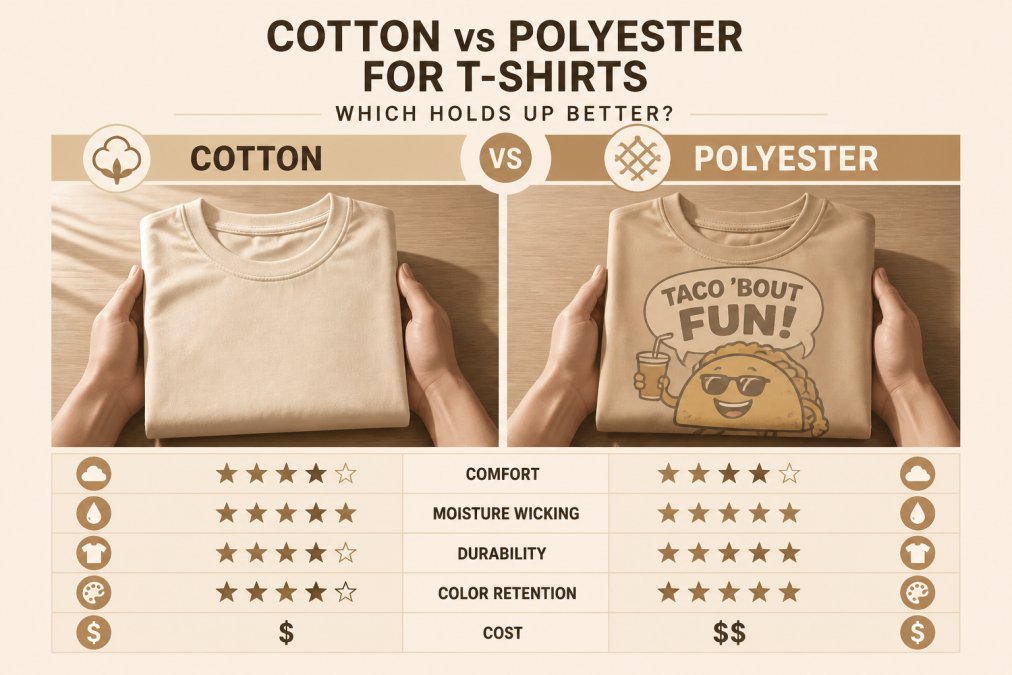
- Cotton: soft, breathable, prints cleanly, shrinks slightly
- Polyester: no shrinkage, moisture-wicking, warmer, weaker ink bond
- Poly-cotton blend: splits the difference, holds shape
Best Fabric for Graphic T-Shirt Printing and Lasting Comfort
Cotton is the best fabric for graphic t-shirt printing because it absorbs DTG ink and screen-print plastisol evenly, giving bold designs a clean, lasting finish.
American Apparel and Footwear Association fiber guidance
Large bold slogans cover more surface area, so print cracking shows faster; heavier cotton holds up better than a thin blend. GSM (grams per square meter) tells you how substantial a shirt feels.
A Wise Woman Once Said 'Nope, Not →
- Lightweight (under 150 GSM): airy, best for hot climates
- Midweight (150-180 GSM): the sweet spot for most graphic tees
- Heavyweight (180+ GSM): structured, opaque, warmer
Sensory comfort matters for neurodivergent wearers: cotton feels smoother than synthetics, and tagless labels reduce irritation. Humid summers favor breathable cotton; cool weather suits a heavier blend.
For sizing, check the fit and drape before ordering. StumbleRump's FTC guidance on textile labeling cotton tees, like the Whatever.. I'm Ready slim fit and the regular-fit Life Is Beachy, cover both.


Choosing the right fabric decides whether your funny t-shirt survives one party or fifty. StumbleRump prints bold humor on soft cotton tees, from the Beaches, Booze & Besties crew neck to the Duct Tape Won't Fix Everything unisex fit, so your joke stays sharp and your shirt comfortable.

Frequently Asked Questions
What is the comfiest material for a t-shirt?
Ring-spun cotton is the softest option for most people. Its finer, smoother yarns create a gentle hand-feel that gets softer with each wash. Tri-blend fabrics (cotton, polyester, and rayon) come close, offering a lightweight drape that works well in warm weather. For funny t-shirts worn at parties or festivals, breathability matters as much as softness, so look for cotton-rich blends with a GSM between 150 and 180.
Is 100% cotton better than a poly-blend for graphic tees?
It depends on how you plan to wear the shirt. Cotton takes screen printing and DTG ink well, giving bold designs a crisp look. Poly-cotton blends resist shrinkage and hold their shape longer through repeated washes. For a funny t-shirt you will wear weekly, a 60/40 cotton-poly blend balances print quality with durability. Pure cotton wins on softness and breathability, while blends win on longevity and color retention.
Does fabric choice affect how graphic prints look on t-shirts?
Yes, fabric weight and fiber content change how ink sits on the surface. Heavier cotton fabrics (180 GSM and up) give screen-printed graphics a solid, opaque finish. Lighter or highly textured fabrics can cause ink to spread or fade faster. DTG printing works best on 100% cotton because the ink bonds directly with natural fibers. On polyester, DTG requires a pre-treatment for the colors to stay vivid after washing.