

How to Prevent Graphic Tees from Shrinking
Table of Contents
- Why Graphic Tees Shrink: Understanding Fabric Behavior
- How to Wash Graphic Tees Without Causing Shrinkage
- Drying Methods That Protect Your Graphic Tees
- How to Choose the Right Shirt Size to Account for Shrinkage
- Reading Fabric Care Labels for Shrinkage Prevention
- How to Fix a Shrunken Shirt: Recovery Techniques
- Your Graphic Tee Care Checklist
- Conclusion
Last Updated: August 17, 2026
Why Graphic Tees Shrink: Understanding Fabric Behavior
Graphic tees shrink because cotton fibers contract when exposed to heat and moisture. Cotton naturally absorbs water and expands; when heat is applied during washing or drying, fibers lose moisture and shrink back down, sometimes permanently. Screen-printed designs intensify the problem because the ink bonds to the fabric surface, and aggressive washing or high heat can damage both the fibers and the graphic.
Most shrinkage happens in the first few washes, making an early care routine critical. Fabric composition, water temperature, wash cycle intensity, and drying method all influence how much a shirt will shrink. Pre-shrunk fabrics have undergone controlled shrinking at the factory but can still shrink further with improper handling.
At StumbleRump, we design graphic tees with quality fabrics that resist excessive shrinkage when cared for properly. Even the best-made shirt will shrink if washed in hot water and machine dried on high heat. The key is understanding that shrinkage is preventable with the right approach.
How to Wash Graphic Tees Without Causing Shrinkage
Cold Water Washing and Temperature Control
Washing graphic tees in cold water is the single most effective step to prevent shrinkage. Cold water causes less fiber expansion than warm or hot water, reducing subsequent contraction during drying. Even switching from warm to cold water noticeably reduces shrinkage. Hot water opens up the fiber structure, allowing maximum water absorption and shrinkage; cold water keeps fibers relatively stable.
Set your washing machine to the coldest setting available, ideally below 60 degrees Fahrenheit. This temperature protects the fabric while allowing detergent to work effectively. Cold water cleans as well as warm water for most loads, especially graphic tees without heavy stains.
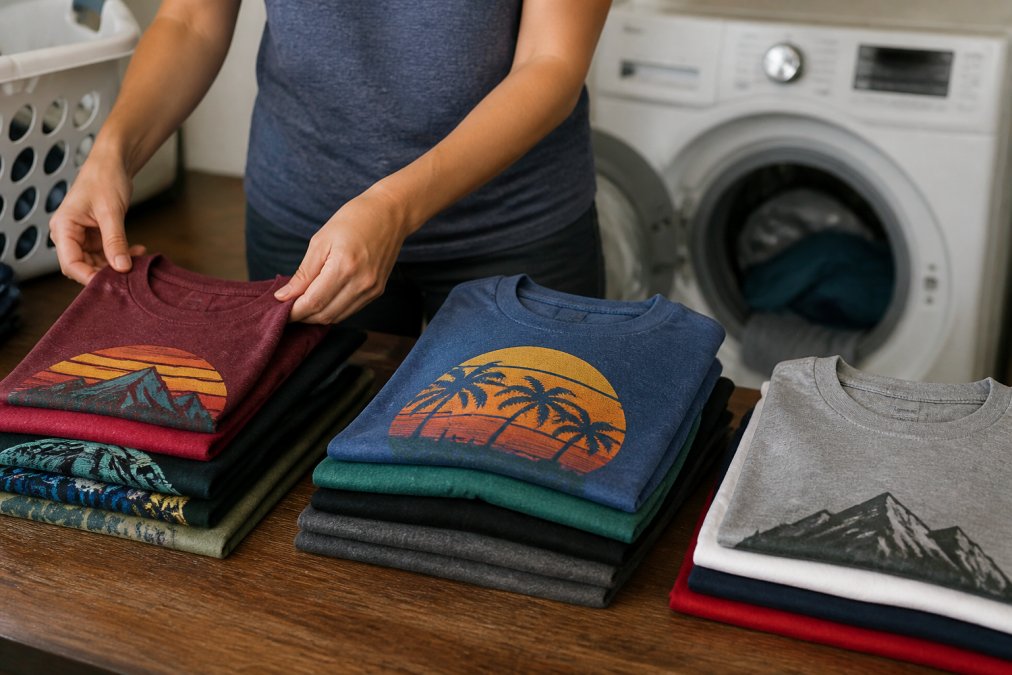
Wash graphic tees separately from heavier fabrics like jeans or towels. Heavier items create more mechanical action, contributing to shrinkage through friction. Keeping graphic tees with similar lightweight items reduces unnecessary stress on the fabric.
Gentle Cycle and Detergent Selection
Use a gentle or delicate wash cycle instead of standard or heavy-duty cycles. The gentle cycle reduces mechanical action, the tumbling and friction inside the machine, putting less stress on fibers and protecting screen-printed graphics from peeling or cracking. Lower spin speeds also help; they reduce stress on fibers compared to high-speed spinning.
Use mild detergent rather than heavy-duty formulas. Heavy-duty detergents contain harsher surfactants that can be more aggressive on fabric fibers. Standard or delicate-formula detergents clean effectively without extra intensity. Avoid detergents with heavy bleach or optical brighteners, which can weaken fibers and contribute to shrinkage.
Don't overload the washing machine. Fill it to about three-quarters capacity, leaving space for water and detergent to circulate. This allows the gentle cycle to work as intended without forcing excessive friction between garments.
Drying Methods That Protect Your Graphic Tees
Air Drying and Hang Drying Techniques
Air drying is the best way to prevent shrinkage after washing. It eliminates heat exposure entirely, removing the primary cause of post-wash shrinkage. Fibers simply release absorbed water without contracting from heat.
Hang drying is the gold standard for graphic tees. Use a clothesline, drying rack, or hanger in a well-ventilated area away from direct sunlight, which can fade both the graphic and base fabric. Hang in a shaded area with good air circulation, near a window with indirect light, or in a room with a fan running.
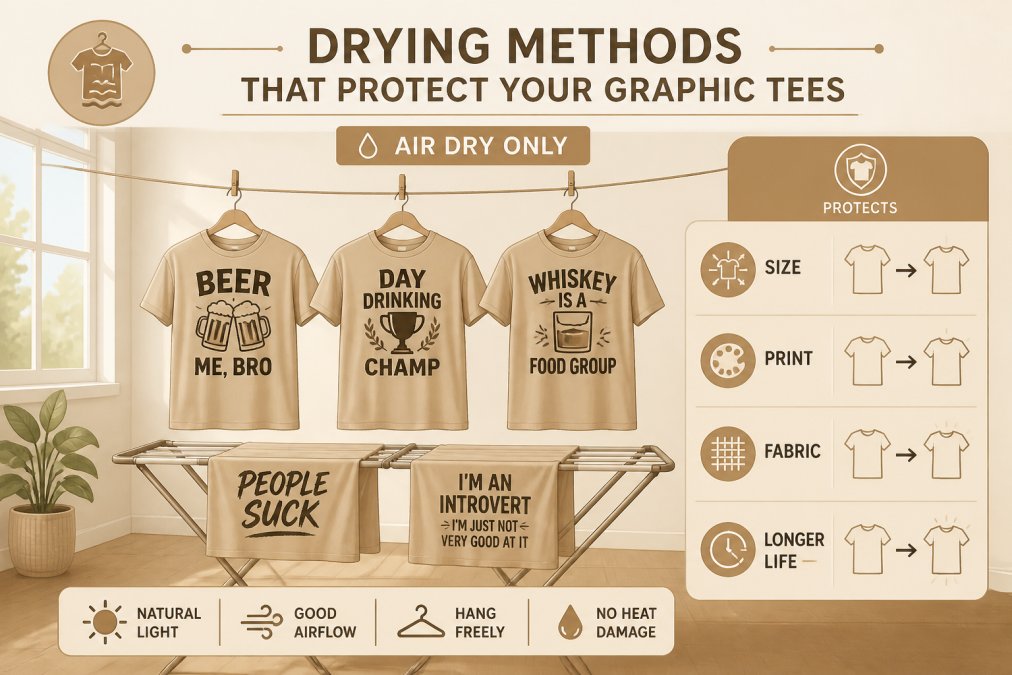
When hanging tees, fold the shirt in half lengthwise and hang it by the fold at the middle of the back. This distributes weight across the entire width and prevents neckline stretching. Alternatively, lay the shirt flat on a clean, dry surface like a drying rack or mesh screen. Flat drying takes longer but puts zero stress on the fabric.
Ensure adequate air circulation. A stagnant, humid environment slows drying and can cause mildew or odors. Open a window, run a fan, or use a well-ventilated room. In humid climates, a dehumidifier helps speed drying without adding heat.
Avoiding High-Heat Cycles
Never use a clothes dryer for graphic tees. Tumble dryers apply direct heat, causing shrinkage. Even low-heat settings shrink graphic tees more than air drying. The combination of heat and mechanical tumbling is doubly damaging to already-stressed fabric.
If you must use a dryer, use the absolute lowest heat setting, usually labeled "air dry" or "no heat." Set the timer for 10-15 minutes to remove excess moisture, then hang the shirt to finish drying in open air. However, full air drying is still preferable.
Avoid fabric softener and dryer sheets. These products coat the fabric surface, reducing absorbency and leading to uneven drying and potential shrinkage. They also accumulate over repeated wash cycles, damaging the graphic design.
How to Choose the Right Shirt Size to Account for Shrinkage
Even with perfect care, some minimal shrinkage may occur, especially in the first wash. If you're between sizes, choose the larger size. A slightly loose shirt is better than one that becomes too tight after the first wash.
Check the product description for fabric composition. Cotton blends with polyester or other synthetic fibers shrink less than 100% cotton. Synthetic fibers don't absorb water like cotton does, making them more dimensionally stable. A 50/50 cotton-polyester blend shrinks significantly less than pure cotton.
StumbleRump provides detailed fabric information and sizing guidance for each shirt. Review the fabric composition and any shrinkage notes before purchasing. If the shirt is 100% cotton, expect potential shrinkage and size up accordingly. If it's a blend, risk is lower.
Wash a new shirt before wearing it to an important event. This allows any shrinkage to occur beforehand, so you know exactly how the shirt will fit. Wash using cold water and gentle cycle methods, then air dry completely.
Reading Fabric Care Labels for Shrinkage Prevention
Fabric care labels provide essential information about safe handling. The label indicates fiber content, recommended wash temperature, and drying method. Following these instructions is the most reliable way to prevent shrinkage.
Look for fiber content first. "100% cotton" indicates potential shrinkage; "65% polyester, 35% cotton" or similar indicates lower risk. Natural fibers like cotton, linen, and wool are more prone to shrinkage than synthetics like polyester and nylon. Blended fabrics offer a middle ground.
Care instructions are specific to that garment's construction. Labels stating "wash cold, gentle cycle, hang dry" indicate the safest method. Labels saying "warm water acceptable" indicate the fabric resists shrinkage, but cold water is still safer. Never ignore instructions stating "lay flat to dry" or "do not machine dry", these exist because the garment will shrink or damage otherwise.
Preshrunk labels indicate the fabric has undergone controlled shrinkage at the factory. However, preshrunk doesn't mean "won't shrink further." It means the fabric minimizes additional shrinkage, but improper care can still cause it. Treat preshrunk fabrics with the same care as any other cotton garment.
How to Fix a Shrunken Shirt: Recovery Techniques
If a graphic tee has already shrunk, some recovery is possible, though results vary. The sooner you attempt recovery after shrinkage occurs, the better your chances. Fresh shrinkage is easier to reverse than shrinkage set in for months.
The most common recovery method is gentle stretching while the shirt is damp. After washing in cold water with a gentle cycle, while still wet, gently stretch it back to original size. Lay it flat and carefully pull the width and length to correct dimensions. Pin or weigh down edges to hold the shape while air drying. This works best on cotton blends and is less effective on 100% cotton that has already shrunk significantly.
Another approach is soaking the shrunken shirt in cool water with a small amount of hair conditioner or fabric relaxer. The conditioner makes fibers more pliable. Soak for 15-20 minutes, then gently stretch the shirt while wet and lay it flat to dry. This method is gentler than aggressive stretching and works for mild shrinkage.
For severe shrinkage, professional dry cleaning services sometimes offer restoration, but results aren't guaranteed. Once shrinkage sets in, full recovery is unlikely. A shirt that shrinks 10% is unlikely to return completely to its original size through any home method. Prevention is far more effective than recovery.
Your Graphic Tee Care Checklist
| Step | Action | Frequency |
|---|---|---|
| Sort | Group graphic tees by color and fabric type | Before each wash |
| Fill | Load machine to 75% capacity | Every wash |
| Water | Set to coldest temperature available | Every wash |
| Cycle | Select gentle or delicate setting | Every wash |
| Detergent | Use mild detergent, avoid bleach | Every wash |
| Spin | Use lower spin speed if available | Every wash |
| Dry | Hang or lay flat in shaded, ventilated area | After every wash |
| Storage | Store in cool, dry place away from direct sunlight | Between wears |
Use this checklist every time you wash a graphic tee to ensure you're following best practices for preventing shrinkage. Consistency matters, one careless wash can undo months of proper care.
Before washing for the first time, check the fabric care label and note the fiber content. If it's 100% cotton, plan to size up on your next purchase or accept that minor shrinkage may occur. If it's a blend, shrinkage risk is lower, but follow the cold water and gentle cycle methods anyway.
Conclusion
Preventing graphic tees from shrinking comes down to three core practices: wash in cold water using a gentle cycle, air dry instead of machine drying, and follow the fabric care label instructions. These steps protect both the fabric and the graphic design, extending the life of your shirt and keeping it fitting properly wash after wash.
When you invest in a quality graphic tee from StumbleRump, designed with bold, humorous designs that deserve to last, proper care ensures your shirt stays looking great for years. Our tees are built with fabrics selected for durability, but even the best-made shirt needs the right care routine. Start with cold water, use a gentle cycle, and hang dry every time. Your graphic tee will thank you with consistent fit and vibrant design preservation.
Frequently Asked Questions
What temperature should I wash graphic tees to prevent shrinking?
Wash graphic tees in cold water (below 60°F) to prevent fiber contraction. Cold water washing is the single most effective way to stop shrinkage. Hot water causes cotton fibers to contract immediately, which is especially damaging to screen-printed designs. Use cold water for every wash, even if the shirt doesn't look dirty. Your graphic tees will stay vibrant and maintain their original fit wash after wash.
Can you unshrink a graphic t-shirt?
Yes, you can partially restore a shrunken shirt using moisture and gentle stretching. Soak the shirt in lukewarm water mixed with a hair conditioner or fabric relaxer for 15-20 minutes. Gently stretch the damp fabric back to its original shape while it's wet, then lay it flat to air dry. This works best on minor shrinkage. Severe shrinkage is harder to reverse, which is why prevention through proper washing and drying is so important.
Is air drying better than tumble drying for graphic tees?
Air drying is significantly better for graphic tees. Tumble drying exposes your shirt to high heat, which causes both fiber contraction and heat damage to screen-printed designs. Hang drying or laying your shirt flat on a drying rack prevents shrinkage and extends the life of the graphic. Air drying takes longer, but it's the best way to protect your investment and keep your favorite funny shirts looking brand new.
How do I know if a graphic tee will shrink before I buy it?
Check the fabric composition on the care label. Pre-shrunk cotton blends shrink less than 100% cotton. Look for labels that say 'pre-shrunk' or mention synthetic blends, which have better dimensional stability. StumbleRump's graphic tees are made with quality fabrics designed to minimize shrinkage, but always verify the fabric content and care instructions before purchasing. Reading fabric care labels is your best defense against unexpected shrinkage.
This article was written using GrandRanker