

How to Choose the Right Shirt Size: A 2026 Guide
Table of Contents
- What You'll Need Before You Start Measuring
- How to Measure Your Chest for a Shirt That Actually Fits
- How to Measure Neck Size for Dress Shirts
- Sleeve Length, Shoulder Width, and Torso Length
- Difference Between Slim Fit, Regular Fit, and Relaxed Fit
- How to Choose the Right Shirt Size When Brands Are Inconsistent
- Fabric Shrinkage and How It Changes Your Right Shirt Size
- Conclusion
Last Updated: August 13, 2026
What You'll Need Before You Start Measuring
Getting your right shirt size starts with two minutes of prep, not guesswork. Here's what you need:
- A flexible fabric tape measure (a stiff ruler won't work)
- A friend to help, or a mirror if measuring solo
- A well-fitting shirt you already own (useful as a reference)
- A pen and paper or your phone to record measurements
Always measure over a thin shirt or nothing at all, even one extra layer can throw your chest measurement off by an inch or more, landing you in the wrong size. Shirt sizing is the practice of matching your body measurements to standardized garment dimensions so a shirt fits your chest, neck, shoulders, and torso without pulling, bunching, or drowning your frame. Write your measurements down; sizing inconsistency across apparel brands is real, and your measurements are the only constant.
How to Measure Your Chest for a Shirt That Actually Fits
Chest measurement is the single most important number for shirt sizing. It determines whether a shirt buttons without pulling and whether the fabric sits flat across your torso.
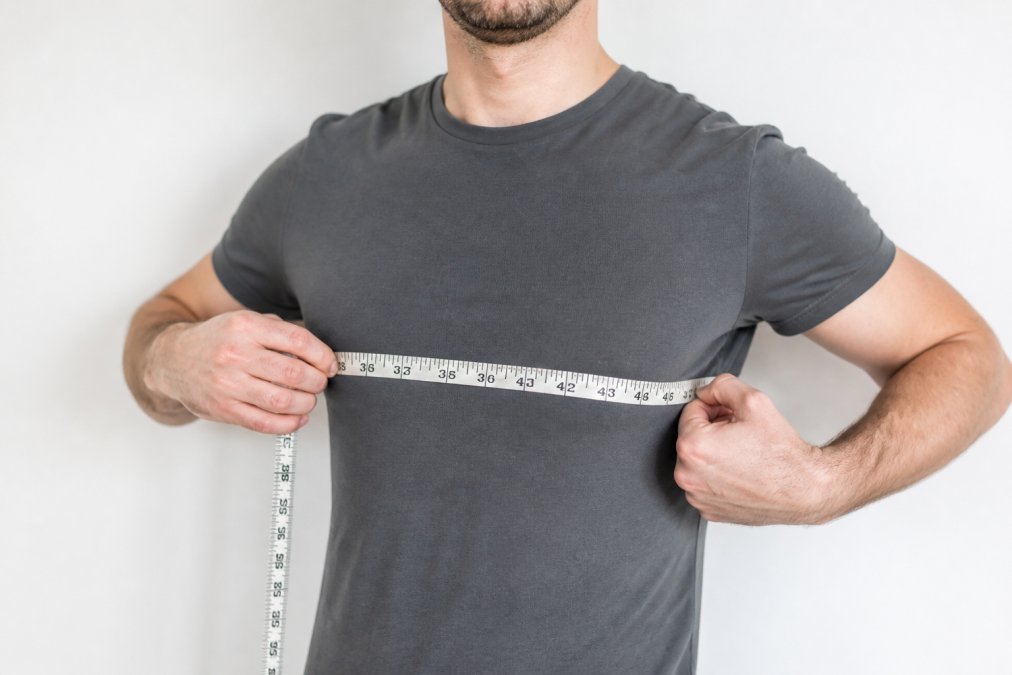
Where to Place the Tape Measure
- Stand straight with your arms relaxed at your sides
- Wrap the tape measure around the fullest part of your chest, just under your armpits and across your shoulder blades
- Keep the tape parallel to the floor at armhole level
- Breathe normally, then exhale gently before reading the number
- The tape should be snug but not tight; you should be able to slide two fingers underneath
Measuring tape placement matters more than most people realize. Too high and you'll measure your upper chest; too low and you'll miss the widest point entirely.
Chest Measurement to Size Chart (Men's and Women's)
| Chest (inches) | Men's US Size | Women's US Size |
|---|---|---|
| 32-34 | XS | S |
| 35-37 | S | M |
| 38-40 | M | L |
| 41-43 | L | XL |
| 44-46 | XL | XXL |
| 47-49 | XXL | 3XL |
Use this as a starting point, not gospel. Always cross-reference with the specific brand's size chart when available.
How to Measure Neck Size for Dress Shirts
Neck size matters most for dress shirts and button-downs. For graphic tees and casual shirts, chest measurement does most of the work.
Here's how to measure neck size for dress shirts:
- Wrap the tape measure around the base of your neck, where a collar would naturally sit
- Slip two fingers between the tape and your neck to account for collar ease
- Round up to the nearest half inch
According to ASTM International's apparel sizing standards, standardized neck measurements for men's dress shirts in the US typically run in half-inch increments starting from 14 inches. For women's shirts, check that the collar circumference in the garment dimensions allows comfortable movement.
Sleeve Length, Shoulder Width, and Torso Length
Most people measure their chest and call it done. That's where fit goes wrong for everyone with longer arms, broader shoulders, or a longer torso.
Measuring Sleeve Length Step by Step
Sleeve length is measured from the center back of your neck, across your shoulder, and down to your wrist bone.
- Start the tape at the center of the back of your neck
- Run it across the top of your shoulder to the shoulder seam point
- Continue down your arm, slightly bent at the elbow, to your wrist bone
- Record the full measurement in inches
Standard men's sleeve lengths in the US run from about 32 to 37 inches. For casual tees, sleeve length is usually described as short, three-quarter, or long rather than a specific inch measurement.
Shoulder Width and Torso Length
Shoulder width is measured seam to seam across the back of a shirt you already own, or from shoulder bone to shoulder bone on your body. This measurement is critical: a shirt with a shoulder seam that falls off your shoulder will never fit right.
Torso length, measured from the top of your shoulder to your hip, determines whether a shirt stays tucked or rides up. For untucked casual shirts, you generally want the hem to fall just below your waistband.
Difference Between Slim Fit, Regular Fit, and Relaxed Fit
Fit profile changes everything about how a shirt looks and feels, independent of your size. A medium in slim fit and a medium in relaxed fit are not the same garment.
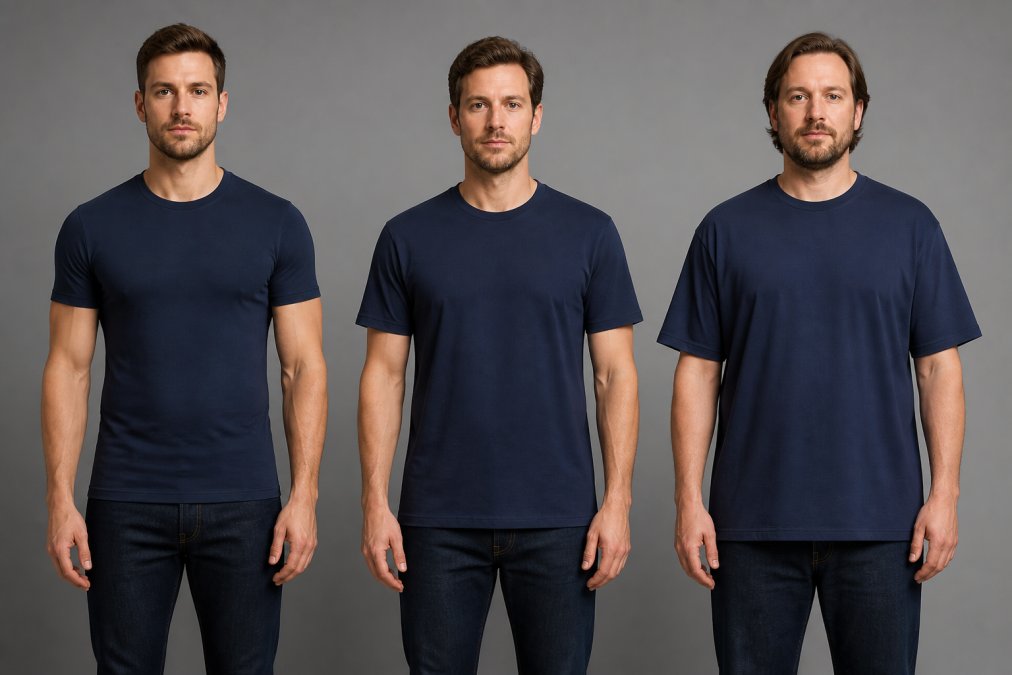
Slim fit shirts are cut close to the body with a tapered torso and narrower armhole. They're designed for leaner body types. If you have broad shoulders relative to your waist, slim fit often creates unwanted pulling across the chest.
Regular fit is the standard cut, offering more room through the chest and torso without being boxy. Most standard sizing charts are calibrated to regular fit garments.
Relaxed fit shirts have a looser, more generous cut through the chest, torso, and shoulders. If you run between sizes or prefer a laid-back look, relaxed fit gives you more breathing room.
| Fit Type | Chest Room | Torso Shape | Best For |
|---|---|---|---|
| Slim Fit | Minimal | Tapered | Lean, athletic builds |
| Regular Fit | Moderate | Straight | Most body types |
| Relaxed Fit | Generous | Boxy | Comfort-first, between sizes |
How to Choose the Right Shirt Size When Brands Are Inconsistent
Brand-specific sizing inconsistencies are the single biggest source of confusion when buying shirts online. A size large from one brand can measure 2 to 3 inches wider in the chest than a large from another. The fix is to stop trusting the label and start trusting the measurements.
Body Shape Variations and What to Look For
Standard sizing charts are built around an idealized height-and-weight ratio that doesn't reflect most people's actual bodies. Here's how to adapt:
- Broad shoulders, narrow waist: Prioritize shoulder width and chest measurement. Look for athletic or tailored fit options.
- Wider through the middle: Size for your chest circumference first. If the torso is too snug, go up one size and tuck if needed.
- Long torso, average chest: Check torso length in the product specs. A shirt that fits your chest but hits above your waistband will look awkward untucked.
- Shorter frame: Avoid relaxed fit in longer styles. Cropped or regular length in slim or regular fit works better.
International Sizing Conversions at a Glance
| US Size | UK Size | EU Size | IT Size |
|---|---|---|---|
| XS | XS | 44 | 44 |
| S | S | 46 | 46 |
| M | M | 48 | 48 |
| L | L | 50 | 50 |
| XL | XL | 52 | 52 |
| XXL | XXL | 54 | 54 |
US and UK sizes often align, but EU and Italian sizing uses numeric chest-based measurements. Always verify against the brand's specific size chart rather than relying on a generic conversion.
Fabric Shrinkage and How It Changes Your Right Shirt Size
Fabric shrinkage is the part of shirt sizing most people ignore until they pull a medium out of the dryer and it fits like a small. The fabric composition of a shirt directly affects how much it shrinks.
Here's how common fabrics behave after washing:
- 100% cotton: Most prone to shrinkage, especially in the first wash. Can shrink 3 to 5 percent in length and width.
- Cotton-polyester blends: More stable than pure cotton. Shrinkage is typically minimal after the first wash.
- Tri-blends (cotton, polyester, rayon): Very stable. Rayon adds softness but can shrink if washed in hot water.
- 100% polyester: Minimal shrinkage. Holds its shape well across washes.
If a shirt is made from 100% cotton and fits perfectly right out of the package, wash it in cold water and air dry it to preserve the garment dimensions. Hot water and a high-heat dryer are the fastest way to turn your right shirt size into a shirt that no longer fits.
According to the USDA Agricultural Research Service's textile research, pre-shrunk or sanforized cotton fabric shrinks significantly less than untreated cotton. Look for "pre-shrunk" in the product description as a sign of better size stability. Shrinkage affects length more than width in most woven and knit shirts. If you're on the edge between sizes and have a long torso, sizing up accounts for both the fit and eventual shrinkage.
Choosing the right shirt size gets complicated fast when brands use different fit profiles, fabrics behave differently after washing, and standard charts don't account for your actual body shape. StumbleRump's graphic tees are built for men and women who want a shirt that makes a statement and actually fits. Check the product page for fabric composition and the size chart for chest measurements before you order, and if you're between sizes, the sizing guidance above will point you in the right direction. Get started with StumbleRump and find the shirt that fits your sense of humor as well as it fits your body.
Frequently Asked Questions
Is it better to size up or size down in shirts?
Size up if you're between measurements and prioritize comfort or plan to layer. Size down only if a shirt runs noticeably large and you prefer a tailored look. For graphic tees specifically, sizing up preserves the design's proportions and prevents the print from distorting across the chest. Always check the brand's size chart using your actual chest and torso measurements rather than relying on your usual labeled size.
How do I measure my chest for a shirt?
Wrap a flexible tape measure around the fullest part of your chest, just under your armpits and across your shoulder blades. Keep the tape level and snug but not tight, you should be able to slip two fingers underneath. That number in inches is your chest circumference. For a comfortable fit in a standard shirt, most size charts add 2 to 4 inches of ease on top of your raw chest measurement.
Does shirt sizing differ between brands?
Yes, significantly. A medium from one brand can measure 2 to 3 inches wider in the chest than a medium from another. This is especially common with graphic tees, where different manufacturers use different block patterns. Always measure yourself first, then compare your numbers against each brand's specific size chart rather than assuming your usual size will transfer. When a brand lists seam-to-seam measurements, those are the most reliable numbers to check.
What does a shirt size like 17/32/33 mean?
This format appears on dress shirts. The first number (17) is the neck circumference in inches. The second number (32) is the sleeve length in inches from the center back of the neck to the wrist. The third number (33) is an alternate sleeve length offered by the same shirt, giving you a half-inch range. Casual tees use S/M/L/XL instead, but dress shirts use these body measurements for a more precise fit.
This article was written using GrandRanker